
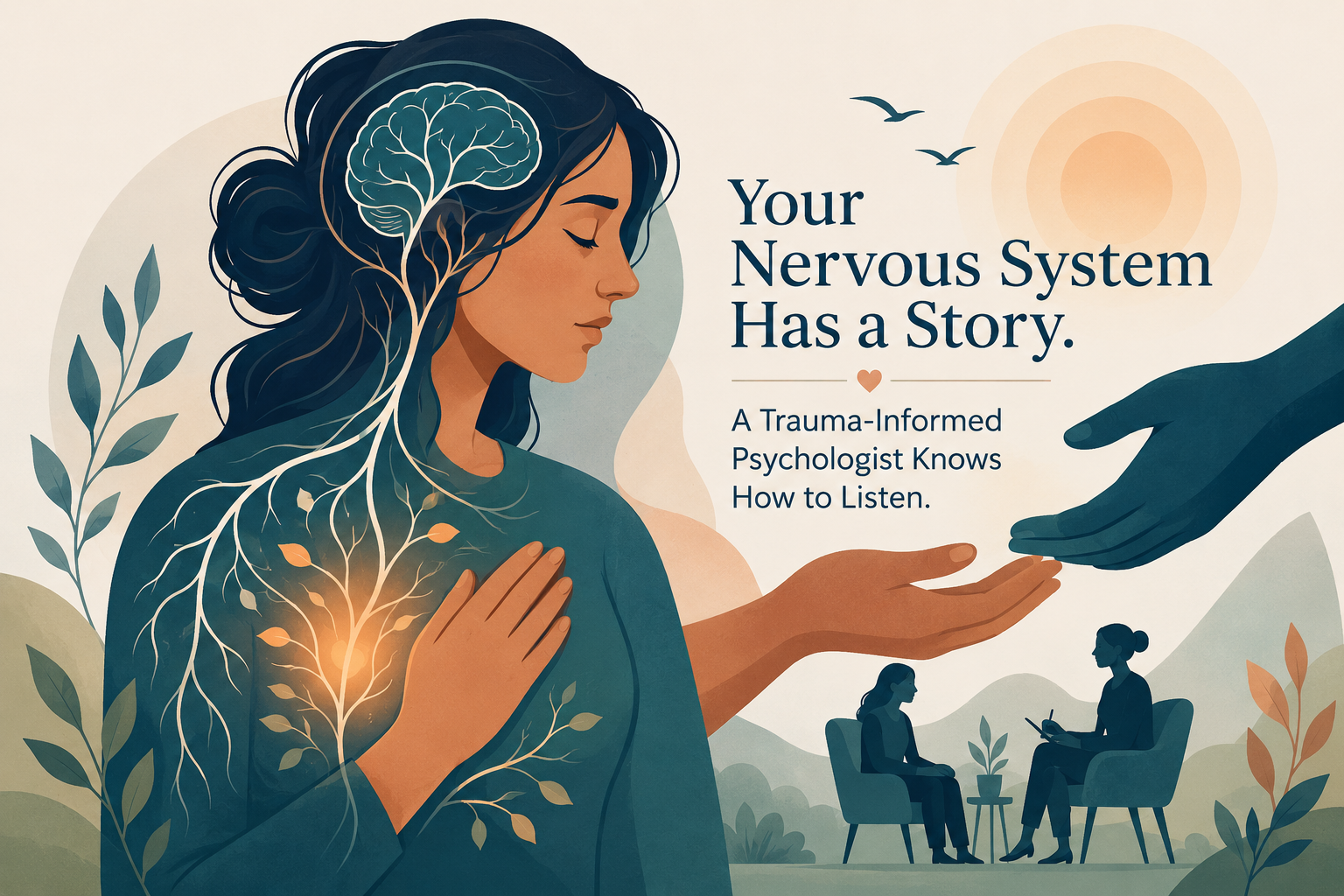
Have you ever apologised for something that wasn't your fault, felt restless when life finally became calm, or prepared for conflict before anyone had actually said a word?
These reactions are often dismissed as being "too sensitive" or "bad at coping." In reality, they may simply reflect a nervous system that learned to survive in ways that once made perfect sense.
Research estimates that nearly 70% of people experience at least one potentially traumatic event during their lifetime. While not everyone develops trauma, our experiences shape how the nervous system interprets safety, trust, connection, and uncertainty. It builds an internal map of the world long before we consciously understand our emotional patterns.
Modern psychology has therefore shifted from asking, "What's wrong with you?" to "What has your nervous system learned?" This perspective replaces judgment with curiosity.
A trauma informed psychologist understands that healing is not about fixing broken people; it is about understanding survival responses that may no longer be serving them.
Your Body Remembers More Than Your Mind
Memory is not stored only as stories we can consciously recall. The nervous system remembers through physical sensations, emotions, breathing patterns, and automatic reactions.
That is why a familiar tone of voice can tighten your chest, silence can feel threatening, or receiving genuine kindness can make you uncomfortable. The nervous system is not asking whether something is objectively dangerous. It is asking whether it feels familiar.
If unpredictability once defined your relationships, consistency may initially feel unsettling. If emotional needs were repeatedly ignored, asking for help may feel riskier than struggling alone.
Healing therefore requires more than insight. Understanding your past matters, but lasting change comes from repeatedly experiencing safety until the body begins to believe it.
When Rest Stops Feeling Safe
One of the quiet consequences of prolonged stress is that peace itself can become uncomfortable.
After years of anticipating the next crisis, the nervous system begins to associate constant activity with safety. A quiet weekend may create anxiety instead of relief, while finishing work early can trigger guilt rather than satisfaction.
This is not laziness. It is a nervous system that has confused vigilance with responsibility.
That is why trauma informed counselling goes beyond encouraging people to "slow down." It helps them understand why rest feels threatening in the first place and gradually rebuilds a healthier relationship with safety, productivity, and control.
The Loneliness of Looking Like You're Fine
Some of the people carrying the greatest emotional weight are also the ones who appear the most capable. They meet deadlines, care for others, remain dependable, and rarely let their struggles show. Because they function so well, very few people stop to ask how much emotional effort it takes to maintain that image.
Behind that appearance of competence is often a nervous system working overtime. It is constantly:
- Analysing every interaction for signs of conflict or rejection.
- Replaying conversations to check if something was said "wrong."
- Anticipating disappointment before it has even happened.
- Measuring self-worth through productivity and reliability.
Your Nervous System Remembers Relationships More Than Events
People often believe trauma is stored as a vivid memory of what happened. More often, the nervous system remembers what relationships felt like during those experiences.
You may not recall every conversation from childhood, but your body may still remember:
- What it felt like to be criticised instead of comforted.
- What it felt like to have your emotions dismissed or ignored.
- What it felt like to face difficult moments without support.
- What it felt like to believe that love or acceptance had to be earned.
This is why two people can experience similar events yet carry very different emotional scars. The difference often lies in whether they felt safe, supported, and understood while living through those experiences.
Recovery, therefore, is not simply about revisiting painful memories. It is about creating new experiences of trust, empathy, and consistency that gradually teach the nervous system a different reality. Every safe relationship becomes evidence that the present does not have to mirror the past.
The Hidden Cost of Becoming "Easy to Love"
One of the quietest consequences of emotional survival is becoming exceptionally good at adapting to everyone else.
People who grew up navigating unpredictable relationships often become accommodating, agreeable, and endlessly understanding. While these qualities are praised, they sometimes come at a hidden cost. Personal needs are minimised, boundaries become difficult to express, and self-worth slowly becomes tied to being convenient rather than authentic.
The deepest loss is not the inability to say "no." It is the belief that love has to be earned by asking for less.
One of the most powerful moments in therapy is realising that healthy relationships do not require you to disappear for someone else to stay.
Why Healing Often Feels Uncomfortable
Healing is frequently mistaken for feeling better all the time. In reality, growth often feels unfamiliar before it feels freeing.
This is why lasting change cannot be rushed. Healing happens when repeated experiences of safety gradually become more familiar than survival itself.
Trauma informed counselling recognises that healing is rarely linear. Some sessions bring clarity, while others uncover emotions that have been buried for years. Both are meaningful because they reflect a nervous system learning that it no longer has to protect itself in the same ways.
What a Safe Therapeutic Relationship Can Change
Therapy is not only about techniques or insight. It is also about experiencing a relationship where consistency replaces unpredictability and curiosity replaces judgment.
A trauma informed psychologist understands that emotional struggles cannot be separated from the nervous system, relationships, and life experiences that shaped them. Rather than focusing only on symptoms, therapy helps people understand the purpose their survival responses once served while gently creating space for new patterns to emerge.
You Were Never Broken; You Were Adapting
Perhaps the greatest misconception about healing is that it transforms people into someone entirely new.
More often, it helps people reconnect with the version of themselves that existed before survival became their default way of living. They begin resting without guilt, asking for support without shame, setting boundaries with greater confidence, and recognising that their worth is not measured by perfection or self-sacrifice.
That transformation rarely happens through one profound breakthrough. It happens through countless small moments in which the nervous system slowly realises that today's world is different from yesterday's.
Remember
Every nervous system carries a story. Some stories were shaped by safety and connection; others by unpredictability, loss, or emotional neglect. Yet none of these experiences permanently define who you are.
Working with a trauma informed psychologist is not about fixing what is broken. It is about understanding the wisdom behind your survival responses and helping your mind and body recognise that they no longer have to fight battles that have already ended.