
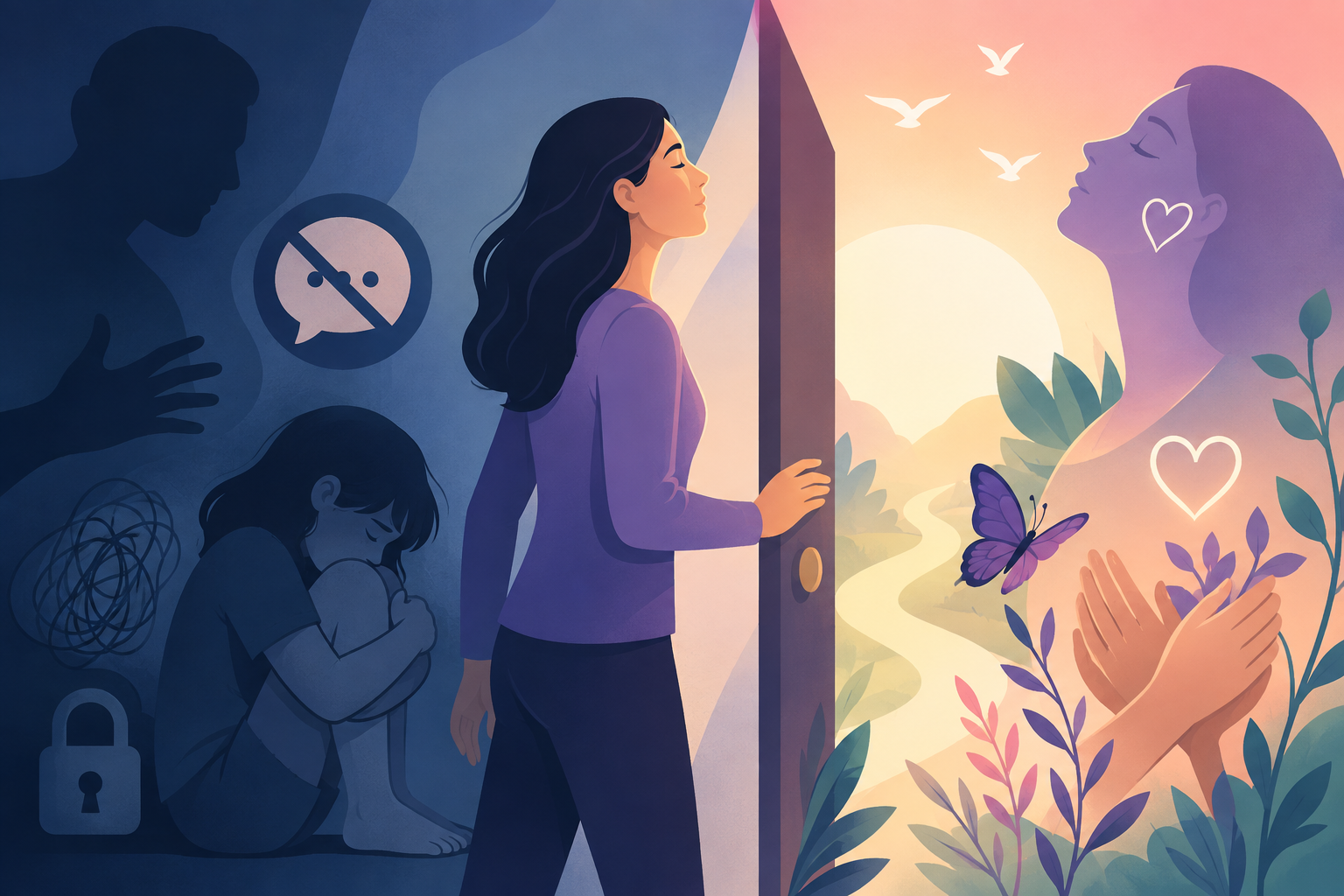
Silence has a way of changing people.
Not overnight. Not dramatically. But quietly, over years, until it begins to shape the way they think, feel, trust, and even see themselves.
For many survivors, the hardest part isn't only what happened. It's carrying the weight of it without ever feeling safe enough to speak about it.
Some remain silent because they fear they won't be believed. Others worry about hurting their family, being blamed, or reopening wounds they have spent years trying to bury. Eventually, the silence becomes so familiar that it feels easier to carry than the possibility of being misunderstood.
That silence comes at a cost. Experiences that remain unspoken don't simply disappear. They often find other ways to express themselves through anxiety, self-doubt, difficulty trusting others, emotional numbness, or a persistent feeling that something is wrong, even when life appears to be moving forward.
Why Silence Often Feels Safer Than Speaking
One of the greatest misconceptions about trauma is that people immediately tell someone what happened.
The reality is often very different.
Children rarely have the words to describe experiences they cannot fully understand. When the person causing harm is someone they know, trust, or depend on, the confusion becomes even greater. Fear, shame, manipulation, or threats can make staying silent feel like the safest option.
As they grow older, that silence often continues for different reasons. They may question their own memories, minimise what happened, or convince themselves that talking about it won't change anything.
Many survivors don't hide their stories because they are ashamed of what happened.
They hide them because they have spent years protecting themselves from what might happen if they speak.
The Weight of Carrying an Untold Story
One of the least discussed consequences of trauma is the emotional effort it takes to carry an experience that very few people know about.
Life continues. People build careers. They celebrate birthdays. They laugh with friends. They show up for work and care for their families.
From the outside, everything may appear perfectly normal.
Inside, however, there can be an ongoing negotiation between wanting to move forward and wondering whether a part of you is still waiting to be heard.
Many survivors become incredibly skilled at functioning. They learn how to keep busy, stay productive, support others, and avoid anything that brings them too close to memories they have worked hard to keep buried.
This isn't a weakness. It's survival. The difficulty is that surviving and healing are not the same thing.
Shame Was Never Yours to Carry
Perhaps the most painful legacy of childhood sexual abuse is shame.
Not because survivors did something wrong, but because trauma has a way of shifting responsibility onto the very people who were harmed.
Children naturally try to make sense of confusing experiences. Without the emotional maturity to understand abuse, many conclude that they must somehow be responsible for what happened. That belief can quietly follow them into adulthood, influencing self-worth, boundaries, and the way they allow themselves to be treated.
Over time, shame becomes more than an emotion. It becomes a lens through which people interpret themselves. Healing often begins when that misplaced responsibility is finally returned to where it belongs.
The abuse was never your fault. Neither was the silence that followed.
When You Stop Trusting Your Own Reality
One of the quieter effects of trauma is that it can make people question themselves long after the experience has ended.
You may wonder whether you're overreacting. You might minimise your own pain because someone else "had it worse." You may even catch yourself searching for proof that what happened was "bad enough" to deserve compassion.
This self-doubt doesn't appear out of nowhere. It often develops when a child's experiences are ignored, dismissed, or never acknowledged in the first place. Over time, they learn to trust other people's versions of events more than their own feelings.
Healing involves more than processing painful memories. It also means rebuilding trust in yourself. Trusting that your emotions have meaning, your boundaries deserve respect, and your story does not need anyone else's permission to be valid.
The Cost of Being Believed Too Late
There is another kind of grief that survivors often carry, one that rarely gets spoken about.
It is the grief of wondering how life might have been different if someone had noticed sooner. If one trusted adult had asked the right question. If one person had listened without doubt or judgment.
Being believed does not erase trauma, but it can change the way a survivor carries it. Feeling dismissed, questioned, or blamed often adds another layer of pain to an experience that was already deeply overwhelming.
That is why creating spaces where people feel heard matters so much. Sometimes, the first step towards healing isn't finding the perfect words. It's finding someone who is willing to listen without trying to explain your experience away.
Healing Doesn't Begin With Remembering Everything
People often assume that healing means recalling every detail of what happened.
For many survivors, that isn't how recovery works.
Trauma can affect the way memories are stored. Some people remember events vividly. Others remember only fragments, emotions, body sensations, or a lingering feeling that something wasn't right. None of these experiences make the trauma any less real.
Healing is not a test of memory.
It is the gradual process of helping the mind and body recognise that what once felt unsafe does not have to define every moment of the present. It is learning to respond to yourself with curiosity instead of criticism, and compassion instead of shame.
The Power of Being Heard
There is something profoundly healing about finally speaking the words you have carried in silence.
Not because talking magically removes pain, but because it interrupts isolation.
Trauma often convinces people they have to carry everything alone. A safe conversation challenges that belief. It reminds survivors that they deserve to be listened to without blame, believed without interrogation, and supported without conditions.
For many people, professional support becomes an important part of that journey. Working with Aanchal Narang sexual intimacy coach can offer a compassionate and non-judgmental space to explore the emotional impact of trauma, rebuild trust in oneself, and develop healthier ways of relating to others.
Healing Is Often Quieter Than People Expect
Healing is rarely one dramatic breakthrough.
More often, it is a collection of small moments that slowly begin to change how life feels.
It looks like setting a boundary without apologising.
It looks like asking for help instead of carrying everything alone.
It looks like recognising that your reactions make sense in the context of what you've lived through.
It looks like allowing yourself to believe that safety, respect, and kindness are things you deserve, not things you have to earn.
These changes may seem ordinary to someone else.
To a survivor, they can be extraordinary.
Final Thoughts
Breaking the silence around childhood sexual abuse is not simply about telling a story. It is about removing the shame that was never meant to be carried in the first place.
Every survivor's journey looks different. Some choose to speak openly. Others take years before sharing their experiences with even one trusted person. Both paths deserve compassion.
What matters most is understanding that silence is often a survival strategy, not a sign of weakness. And while it may have once offered protection, healing begins when people no longer have to carry that weight alone.
The past cannot be rewritten, but the meaning we give it can change. When survivors are met with empathy instead of judgment, and understanding instead of doubt, something remarkable begins to happen.
The silence starts to lose its power.
And in its place, hope finds room to grow.