
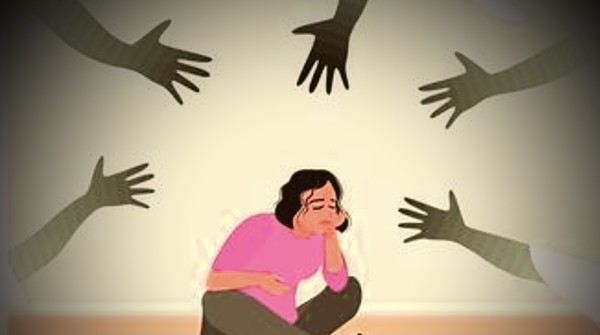
What if the problem isn't who you are?
What if your relationships are still carrying the fingerprints of experiences that happened long before you ever fell in love?
For many survivors, the effects of childhood sexual abuse do not end when the abuse ends or do not stay confined to childhood.
They often reappear years later in places that seem unrelated; dating, marriage, friendships, intimacy, conflict, self-worth, and even the ability to relax around people who genuinely care. They often find their way into adult relationships through trust issues, intimacy struggles, people-pleasing, emotional withdrawal, or a constant fear of being hurt.
Childhood sexual abuse is more than a painful experience; it is a profound violation of safety during a time when a child is learning what trust, love, and protection are supposed to feel like. When those boundaries are broken, the impact often extends far beyond childhood. The mind adapts in order to survive, becoming more alert to danger, more cautious with trust, and more sensitive to rejection or harm. Years later, the abuse may be over, but the lessons it taught the nervous system can continue to shape how a person sees themselves, others, and the world around them.
For many adults, relationship struggles are not simply about communication problems or choosing the wrong partners. Sometimes, they are connected to experiences that happened much earlier in life.
The challenge is that most people do not immediately recognise these patterns as trauma. They just assume something is wrong with them.
Trauma Changes More Than Memories
One of the biggest misconceptions about trauma is that it is only about remembering painful events. Trauma also shapes beliefs.
It teaches us what to expect from people, relationships, and ourselves.
A child who experiences abuse may unconsciously learn:
- My boundaries don't matter.
- Trust is risky.
- Love can hurt.
- My needs are too much.
- I have to stay alert to stay safe.
Years later, these beliefs can quietly influence dating, marriage, friendships, and intimacy.
The person may not even realise they are operating from old survival rules.
Wanting Love While Being Afraid of It
One of the most confusing experiences survivors describe is wanting connection and fearing it at the same time. They crave closeness but struggle when someone actually gets close.
This often shows up as:
- Overanalysing messages and interactions
- Expecting rejection before it happens
- Pulling away after emotional intimacy
- Feeling suspicious of healthy relationships
- Constantly looking for signs something is about to go wrong
From the outside, this can seem contradictory.
From the inside, it makes perfect sense.
When trust has been violated early in life, vulnerability does not automatically feel safe. It feels risky.
The Trust Issue Isn't What Most People Think
People often assume trust issues are about insecurity. In reality, trust is deeply connected to safety.
When someone has experienced childhood sexual abuse, their nervous system may stay alert for potential threats even in safe situations.
- A delayed text message becomes evidence that someone is losing interest.
- A disagreement feels like abandonment.
- A misunderstanding feels bigger than it actually is.
The reaction is not necessarily about the present moment. It is often about old experiences that taught the brain to prepare for danger.
Intimacy Can Feel Complicated
When people hear the word intimacy, they usually think about sex. But intimacy is also about being emotionally seen. It is about letting someone know your fears, needs, insecurities, and vulnerable parts.
For survivors, this can be incredibly difficult. Some people avoid intimacy altogether.
Others become disconnected during intimate moments.
Some struggle to communicate what they need or where their boundaries are.
Others seek validation through relationships because being wanted temporarily feels like being valued.
There is no single response to trauma. The common thread is that intimacy often becomes more complicated than it appears on the surface.
This is one area where working with an Aanchal Narang sexual therapist can help individuals understand how past experiences continue to influence present relationships.
The Hidden Emotional Costs Nobody Talks About
A lot of trauma-related content focuses on obvious symptoms. The quieter effects are often overlooked. Many survivors carry an invisible mental workload every day.
They spend enormous energy:
- Monitoring other people's moods
- Avoiding conflict
- Managing everyone else's comfort
- Worrying about being misunderstood
- Second-guessing their own reactions
Over time, this becomes exhausting. People may see someone who appears strong, capable, and independent.
What they do not see is the amount of emotional energy required just to feel safe.
The Grief That Doesn't Have a Name
There is another side of healing that rarely gets discussed.
Grief.
Not only grief for what happened, but grief for what never happened. The childhood that should have felt safe. The trust that should have been protected. The innocence that should have remained intact.
Many survivors spend years focused on moving forward before realising they are carrying a quiet sadness for experiences they never got to have.
Acknowledging that grief can be painful, but it is often an important part of healing.
Why Healthy Relationships Can Feel Uncomfortable
This surprises many people. Healthy relationships do not always feel comfortable at first.
If chaos, inconsistency, or emotional unpredictability were familiar growing up, stability can feel strange.
A respectful partner may seem boring. A calm relationship may feel unfamiliar. Someone who consistently respects boundaries may even trigger suspicion.
This does not mean healthy relationships are wrong.
It often means your nervous system is adjusting to something it has not experienced enough before: safety.
Healing Doesn't Mean Becoming a Different Person
A lot of people approach healing as if they need to completely reinvent themselves.
That is rarely the goal.
Healing is often about understanding why certain patterns developed in the first place. The people-pleaser was trying to stay safe. The hyper-independent person was trying to avoid disappointment. The person who struggles with trust was trying to prevent future hurt.
When viewed through that lens, coping mechanisms begin to make sense.
The goal is not self-judgment. It is self-understanding.
For those working on intimacy, connection, and relationship patterns, support from an Aanchal Narang sexual intimacy coach can provide a safe space to explore these challenges without shame.
Remember
The effects of sexual abuse in childhood are often invisible. They show up in hesitation before vulnerability, fear of abandonment, difficulty trusting, and the exhausting habit of expecting the worst before it happens.
But understanding these patterns changes the conversation.
Instead of asking, "What's wrong with me?", a more compassionate question emerges:
"What happened to me, and how has it shaped the way I relate to others?"
That shift matters.
Because the patterns that helped someone survive are not necessarily the patterns they need forever. And while the past may influence relationships, it does not have to define them.
The moment we begin understanding our reactions with curiosity instead of shame is often the moment healing truly begins.