
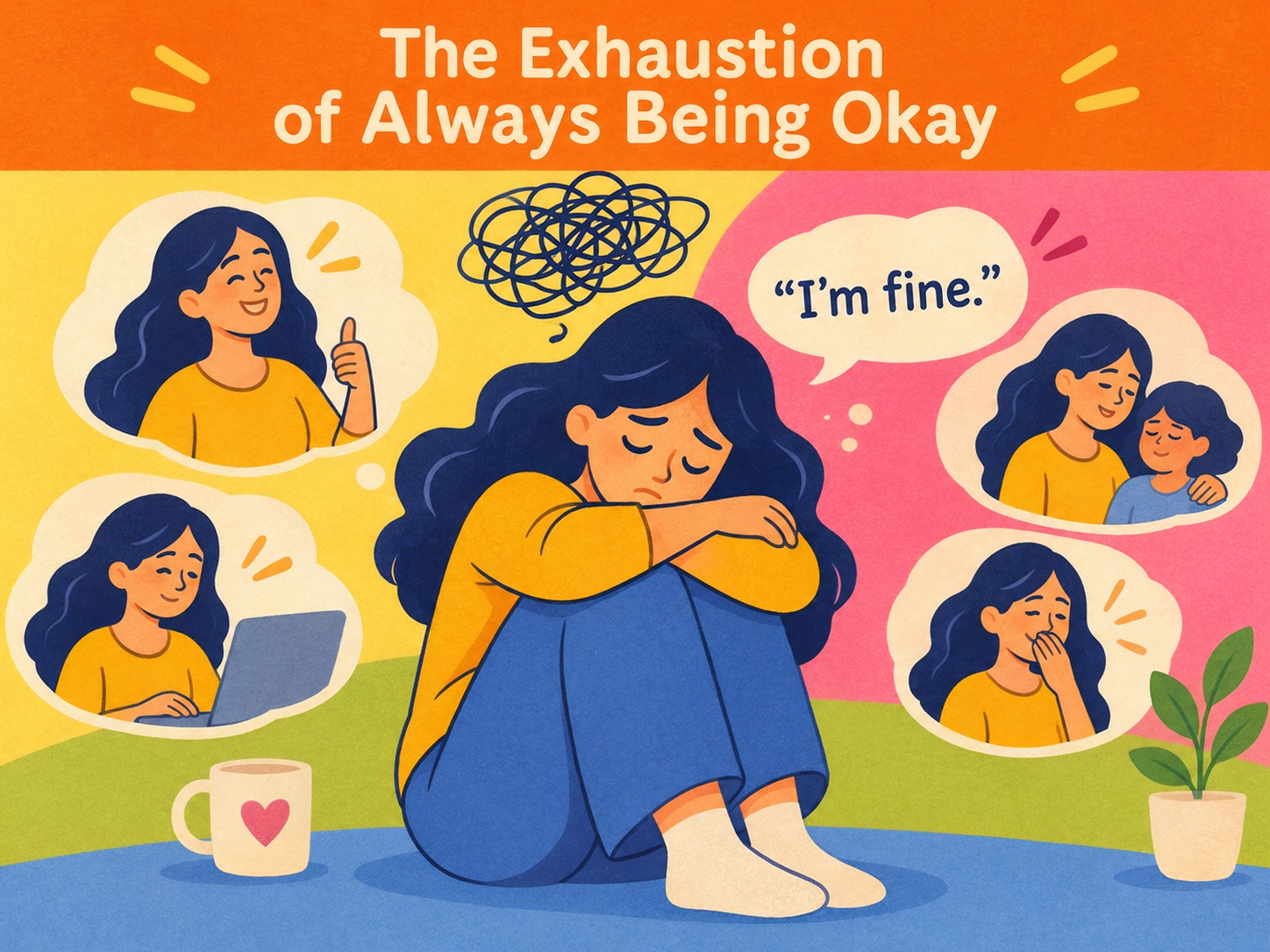
The Exhaustion of Always Being Okay
“I'm fine.”
It's often the easiest thing to say, even when it isn't entirely true. Someone asks how you're doing, and before you've had a moment to check in with yourself, the words are already out. You're fine. You're managing. It's nothing you can't handle. You get through your day, show up for work, respond to messages, and do the things that need to be done. From the outside, everything seems okay. But somewhere underneath all of that, you might be exhausted from having to make it look that way.
In therapy, clients sometimes talk about how tiring it is to always be the person who is okay. The one who holds things together, understands everyone else's perspective, and figures things out independently. They may find it difficult to ask for help or admit that they're struggling, even when they need someone to notice. Sometimes, they don't realise how much they're holding in until they finally have a moment to themselves.
For some people, this pattern begins much earlier in life. Perhaps they grew up in an environment where there wasn't much room for their emotions. Maybe they were told they were overreacting when they cried, encouraged to be strong when they were hurting, or praised for being mature and independent when they were actually learning to manage things on their own. Perhaps expressing their needs felt like adding to someone else's burden.
Over time, they may have learned that being okay was the easiest way to be. It meant fewer questions, fewer uncomfortable conversations, and less risk of being misunderstood. Being the responsible one, the easy child, or the person who never needed much might even have brought them a sense of acceptance. Eventually, they learned to put their feelings aside and carry on.
What begins as a way of navigating an environment can slowly become a way of navigating the world.
You might notice this in the way you respond when someone asks if you need anything. You say no, even when you could use some help. You minimise a difficult experience because someone else has it worse, or explain why you shouldn't be upset before you've even allowed yourself to feel upset. When someone asks what's wrong, you automatically say it's nothing. Being okay becomes less about how you actually feel and more about how well you can keep functioning despite it.
This can be exhausting because it often involves constantly monitoring yourself. You think about how much to share, how you come across, whether you're being too negative, or whether your feelings might make someone uncomfortable. You might laugh off something that hurt you, soften your words, or reassure others that you're fine even when you're not. You become so accustomed to managing how others perceive you that you rarely get the chance to simply experience what you're feeling.
Some clients describe this as having to mask constantly. They feel the need to appear cheerful, composed, capable, or easygoing even when their internal experience is very different. Perhaps they hide their distress because they don't want to worry anyone. Perhaps they fear that being vulnerable will change how people see them. Or perhaps they've spent so long being the person everyone relies on that they don't know how to show up any other way.
And the loneliness that comes with this can be difficult to put into words.
You can have people around you and still feel alone when they only get to see the version of you that is coping. People may genuinely care about you, but if you've become skilled at hiding your struggles, they may not realise how much support you need. They see you showing up, getting things done, and reassuring everyone that you're fine. Meanwhile, the parts of you that feel overwhelmed, uncertain, or in need of comfort remain largely unseen.
There is a particular sadness in being known as the strong one when what you really want is to be able to fall apart sometimes without worrying about how it will affect everyone else. You might wish someone would notice that you're not yourself, ask a second time when you say you're fine, or make room for your feelings without immediately trying to fix them.
And yet, when someone does offer that space, you might struggle to take it. You may not know where to begin, or feel uncomfortable being the one who needs something for a change. You can desperately want to be understood while finding it difficult to let yourself be seen.
Learning to move away from this pattern doesn't mean sharing everything you feel or becoming comfortable with vulnerability overnight. It doesn't mean giving up your independence or becoming less capable. It means giving yourself a little more choice in how you show up.
Perhaps that begins with noticing the moments when you say you're fine automatically. Maybe it means admitting to yourself that something hurt, or telling a trusted person that you've had a difficult day without immediately adding, "But it's okay." It might simply mean allowing yourself to sit with an uncomfortable feeling without rushing to explain it away.
You might also begin to notice which relationships leave you feeling as though you have to perform being okay, and which allow you to let your guard down. Safe relationships make room for difficult feelings, imperfect communication, and days when you simply don't have the energy to be your usual self.
If you've spent years being the person who holds everything together, learning to accept care may take time. You might feel guilty asking for help or worry that expressing your needs will change a relationship. These feelings don't mean you're doing something wrong. They may reflect how unfamiliar it is to let yourself be cared for.
Perhaps you don't need to become better at handling everything. Perhaps you've already spent enough of your life learning how to do that.
You deserve relationships in which you don't have to earn your place by being easy to love. You deserve to have difficult days without making them more comfortable for everyone else. And you deserve to be cared for even when you have nothing to offer, no solution to provide, and no reassuring words to make things feel better.
Sometimes, the most exhausting part isn't what you're going through. It's having to convince everyone, including yourself, that you're handling it just fine.
And sometimes, healing begins with letting that performance rest.