
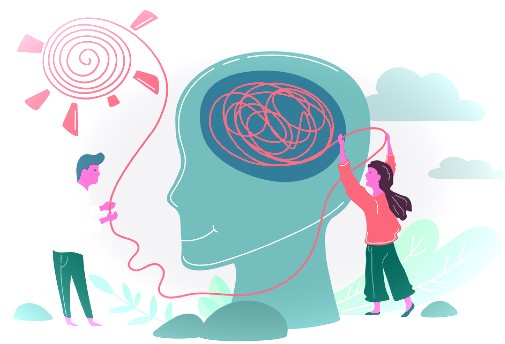
Introduction: This Isn’t Weakness. It’s Biology.
According to the World Health Organization, nearly 1 in 8 people globally live with a mental health condition. In India, studies suggest that almost 15% of adults need active mental health intervention, yet only a fraction seek support.
But here’s what most statistics don’t tell you:
Many of these struggles like anxiety, burnout, addiction, emotional numbness are not personality flaws.
They are nervous system fatigue.
You’re not dramatic, lazy or “too sensitive.”
Your body has been surviving for too long and survival is exhausting.
Your Nervous System: The Silent CEO of Your Life
Your nervous system runs everything.
Heartbeat. Breathing. Digestion. Sleep. Emotional responses. Stress reactions.
It has one primary job: keep you alive.
And when it senses threat; whether it’s childhood neglect, a toxic relationship, academic pressure, workplace humiliation, or ongoing addiction; it shifts into protection mode.
- Fight
- Flight
- Freeze
- Fawn
These aren’t personality traits. They are survival strategies.
When protection mode becomes constant, your nervous system stops knowing what “safe” feels like. That’s when you experience:
- Chronic anxiety
- Sudden rage
- Emotional shutdown
- Overworking
- Addictive behaviours
- Relationship sabotage
- People-pleasing
- Numbness
Your body isn’t malfunctioning. It’s adapting.
Trauma Isn’t Always Dramatic
When people hear the word “trauma,” they think of accidents, abuse, disasters. But trauma is not just what happened. It’s what overwhelmed your nervous system and didn’t get processed.
Sometimes trauma sounds like:
- “Stop crying or I’ll give you something to cry about.”
- “Be strong.”
- “Don’t be so sensitive.”
- “What will people say?”
- “You should be grateful.”
It looks like growing up in a house where:
- Emotions weren’t allowed.
- Achievement mattered more than authenticity.
- Love was conditional.
- Silence felt safer than expression.
Research in developmental psychology shows that chronic emotional invalidation can dysregulate the nervous system just as intensely as overt trauma; and when dysregulation becomes normal, exhaustion becomes identity.
The Trauma of Being “The Strong One”
There is a specific kind of nervous system exhaustion that comes from being the dependable one.
The eldest sibling.
The emotionally mature child.
The “sorted” friend.
The partner who holds everything together.
No one checks on the strong one.
And over time, your nervous system learns something dangerous:
I am safest when I don’t have needs.
So you override hunger. You override tears. You override exhaustion. You become hyper-competent.
But underneath that competence often lives chronic tension, shallow breathing, jaw pain, gut issues, insomnia.
Being “the strong one” is often just long-term self-abandonment dressed as resilience.
Trauma-informed work gently asks: “Who were you before you had to be strong?”
This is why trauma counselling today increasingly integrates body-based modalities like:
- EMDR
- Somatic experiencing
- Parts work (like IFS)
- Breath-based regulation
Because healing memory is different from intellectual memory.
Traditional Therapy vs Trauma-Sensitive Approaches
Traditional talk therapy often focuses on thoughts:
“Change your mindset.”
“Reframe it.”
“Be positive.”
And while cognitive work is powerful, it doesn’t always reach the body.
Here’s the truth: You cannot think your way out of a dysregulated nervous system.
If your body feels unsafe, logic doesn’t land. That’s where trauma informed counselling in India is slowly reshaping the mental health landscape.
Instead of asking, “What’s wrong with you?”
It asks, “What happened to you and what does your body need now?”
This shift is revolutionary.
“Why Am I Still Not Over It?”
This is one of the most common and painful questions people ask.
“Nothing big even happened.”
“Others had it worse.”
“It’s been years.”
But trauma is not comparative.
It’s personal. Your nervous system does not measure suffering on a global scale. It measures perceived threat.
And unresolved stress can stay stored in the body for years; sometimes decades; especially when there is no safe space to process it.
The Hidden Cost of Ignoring Nervous System Fatigue
Your body keeps the score and it eventually demands attention. Trauma counselling becomes deeply crucial for someone who is looking to emotionally regulate their nervous system.
- When chronic dysregulation is ignored, it often shows up as:
- Autoimmune disorders
- IBS and digestive issues
- Sleep disorders
- Migraines
- Relationship instability
- Burnout cycles
- Emotional reactivity
- Chronic shame
A 2019 study in psychosomatic medicine linked early life stress with significantly higher inflammation markers in adulthood.
The Future of Healing Is Safety-Centered
Across the world, trauma-sensitive models are becoming the gold standard in ethical mental health practice.
And trauma informed counselling in India is gradually aligning with this shift; integrating somatic therapies, nervous system education, and culturally sensitive approaches.
The future of therapy isn’t about “fixing” people.
It’s about helping people feel safe enough to heal.
There is a difference.
You Don’t Have to Prove Your Pain
If you’ve been:
- High-functioning but hollow
- Strong but silently struggling
- Productive but panicked
- Sober but emotionally raw
- Successful but disconnected
Your nervous system may have carried more than anyone saw. Trauma informed counselling in India reminds you:
- You are not weak for needing rest.
- You are not dramatic for needing regulation.
- You are not broken for needing help.
You are human.
And humans heal in safety.
Not in pressure.
If this blog resonated, let it be your reminder:
You don’t need to collapse to deserve care.
You don’t need to justify pain to seek support.
And you don’t have to do nervous system repair alone.
Your body has been protecting you for years.
Maybe it’s time for you to protect it back.