
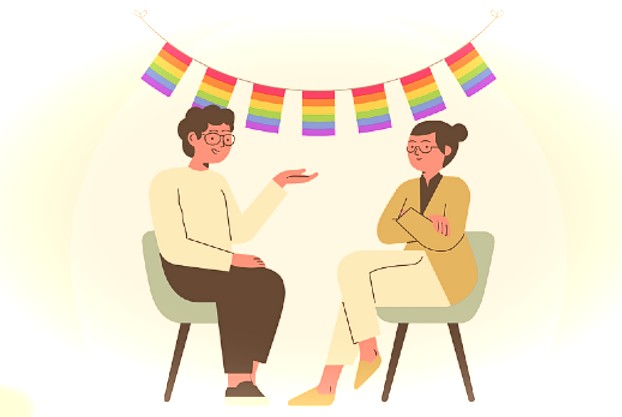
Healing Shouldn’t Require You to Erase Yourself
LGBTQ individuals are 2–3 times more likely to experience anxiety and depression. Suicide attempt rates among queer youth are significantly higher than heterosexual peers.
A 2019 Indian survey reported that over 45% of LGBTQ respondents experienced discrimination in healthcare spaces.
Pause.
Let that sink in.
Now imagine walking into therapy, already anxious and wondering:
Will I need to educate my therapist?
Will they subtly judge me?
Will I be told this is a “phase”?
For many queer individuals, therapy is not just about healing trauma. It is about first ensuring safety because healing cannot happen where identity feels threatened.
And that is exactly where affirmative therapy for LGBTQ individuals in India becomes not optional but essential.
The Science: Why Identity and Mental Health Are Intertwined
Mental health does not exist in isolation.
It lives in families. In classrooms. In WhatsApp groups. In courtrooms. In religious sermons. In silence at the dinner table.
The Minority Stress Model, proposed by psychologist Ilan Meyer, explains that LGBTQ individuals face chronic stress due to stigma, discrimination, internalized shame, and expectation of rejection.
It’s not “being queer” that creates distress; it’s navigating a world that punishes it.
Chronic stress impacts:
- Cortisol levels
- Nervous system regulation
- Sleep cycles
- Self-esteem formation
- Risk for addiction and self-harm
When a person has to constantly scan for safety, their nervous system rarely rests. This is not fragility. This is biology responding to threat.
Therapy for LGBTQ clients often holds layers:
Let’s first name it all:
Identity confusion vs identity suppression
- Religious trauma
- Family enmeshment
- Conversion therapy history
- Relationship invisibility
- Workplace discrimination
- Body dysphoria
- Substance use as coping
And underneath all of that?
A simple longing: To exist without explanation.
Safety Is Not Just “Non-Judgment”
Many therapists say, “I don’t judge.”
But here’s the question:
Are you actively affirming?
There is a difference.
Non-judgment says:
“I won’t criticize you.”
Affirmation says:
“Your identity is valid, whole, and worthy.”
Queer affirmative therapy goes beyond neutrality. It understands:
- Pronouns matter.
- Chosen family matters.
- Cultural nuance in India matters.
- Intersectionality matters (caste, class, religion, gender identity).
Trauma is often systemic, not individual.
Addiction, Coping, and the Hidden Link
Let’s talk about something uncomfortable. Substance use rates are higher in LGBTQ populations globally.
Why?
Because alcohol and drugs often become:
- Social lubricants in unsafe spaces
- Pain numbing tools
- Ways to silence internalized shame
- Temporary escape from dysphoria
When addiction is treated without addressing identity-based stress, healing remains incomplete.
A queer person doesn’t just need sobriety.
They need belonging.
The Indian Context: Why Cultural Sensitivity Is Everything
India is complex.
We have Section 377 decriminalization; but not full social acceptance.
We have Pride parades; but also forced marriages.
We have Instagram activism; but family pressure behind closed doors.
Coming out is not a single event here.
It’s layered:
- Financial dependence
- Arranged marriage systems
- Community surveillance
- Honor dynamics
- Immigration aspirations
Affirmative therapy for LGBTQ individuals in India must hold these nuances.
Western models cannot simply be copy-pasted.
Healing in Mumbai does not look the same as healing in Manhattan.
The Grief No One Talks About: Mourning the Life You Were Supposed to Live
There is a quiet grief many LGBTQ individuals carry; and almost nobody names it. It’s the grief of the imaginary straight life.
The wedding your parents planned in their heads.
The grandchildren, already given surnames.
The simplicity of introducing a partner without calculating reactions.
The relief of never having to “come out” in the first place.
Even when someone feels proud of who they are, there can still be sadness about what could have been easier.
And here’s the uncomfortable truth: You can love your identity and still mourn the life that would have been less complicated.
Queer Affirmative therapy becomes the space where clients whisper:
“I didn’t choose this difficulty.”
And sometimes healing is not about celebration; it’s about grieving the version of safety you never received.
The Role of Trauma-Informed Care
Many LGBTQ clients don’t identify their experiences as trauma but consider:
- Bullying in school
- Being outed without consent
- Medical dismissal
- Family rejection
- Threats of violence
These experiences can wire the nervous system into hypervigilance.
Trauma-informed therapy recognizes:
- Triggers
- Dissociation
- Shame responses
- Attachment wounds
Healing is not just cognitive reframing.
It is nervous system repair.
Questions to Sit With
When did I first feel “different”?
Who taught me that different meant wrong?
Where in my body do I hold fear?
What would safety feel like?
If I did not have to explain myself, who would I become?
Sit with these. Don’t rush the answers.
From Survival to Selfhood
There are stages in queer healing:
1. Survival
2. Stabilization
3. Exploration
4. Integration
5. Pride
6. Advocacy (optional, not mandatory)
Not everyone wants to be a rainbow flag warrior.
Some just want peace and that is enough.
How to Know If Your Therapist Is Truly Affirming
Ask them:
- What is your experience working with LGBTQ clients?
- How do you approach gender identity exploration?
- Are you comfortable discussing non-monogamy?
- How do you handle internalized shame?
- What are your views on conversion practices?
If the answers feel vague, defensive, or dismissive; listen to that.
Your discomfort is data.
The Power of Being Seen
There is something revolutionary about sitting in a therapy room and hearing:
“You are not the problem.”
For many queer clients, that sentence alone begins healing because so much of their life has implied otherwise.
Affirmative therapy for LGBTQ individuals in India is not about special treatment. It is about correcting historical harm. It is about building therapy spaces where identity is not negotiated.
The Future of Queer Healing in India
The mental health field in India is evolving.
More therapists are getting trained. More conversations are happening. More clients are asking informed questions.
But we are not done.
We need:
- More regional language affirmative therapists
- More research on queer mental health in India
- More accessible pricing models
- More intersectional awareness
- More safe group therapy spaces
And we need courage from therapists, families, institutions, and of course, ourselves.
A Reflection to Close With
If you are reading this and wondering whether therapy is “worth it”; let me ask you something.
How much energy have you spent shrinking?
How much brilliance has been paused because survival came first?
Healing is not about changing who you are. It is about removing what told you that you were wrong. You deserve therapy that does not debate your existence. You deserve safety before solutions. You deserve to be whole.
And when identity meets healing; something extraordinary happens. Not transformation into someone new but reunion with who you were before fear.