
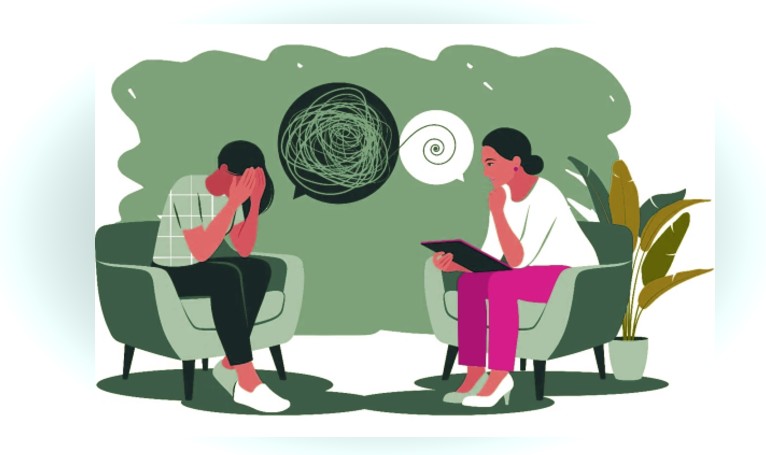
Awareness Is Rising, But So Is Confusion
India is talking about mental health more openly than ever before. What was once dismissed or hidden is now showing up in conversations across workplaces, friendships, and social media. Yet, despite this visibility, access to real support remains limited. Nearly one in seven Indians experiences mental health concerns, but a majority still do not receive professional help.
This gap is where things get complicated. Awareness is increasing, but clarity is not always keeping pace. Many people know of therapy, but fewer understand what it actually involves.
So when we ask whether counselling psychology in India is evolving, we also need to ask whether people are engaging with it meaningfully or just observing it from the outside.
What Evolution in Therapy Actually Means
The growth of therapy is often measured in numbers; more therapists, more platforms, more conversations. But real evolution goes beyond visibility.
It begins to show up when people start relating differently to their emotions and patterns.
- Choosing reflection over reaction
- Seeking understanding instead of quick fixes
- Viewing therapy as a process, not a solution
When therapy shifts from being a last resort to a conscious choice, that is where meaningful change begins. India is moving in this direction, but the shift is still gradual and uneven.
Growth Is Visible; Depth Still Needs Work
The mental health space in India has expanded significantly. Online platforms have made therapy more accessible, and younger generations are more open to seeking support. The stigma, while still present, is no longer as dominant as it once was.
However, this growth brings its own challenges.
- Access does not always guarantee quality
- Increased options can create confusion
- Not all therapy experiences are equally effective
Finding a counselling therapist today is easier than before. Finding the right one is still a process that requires awareness and effort.
Expectation vs Reality: Where It Shifts
Many people approach therapy expecting immediate relief. The idea is simple; talk about what’s wrong and feel better.
In reality, the process is more layered.
- Therapy can bring up discomfort before clarity
- It may challenge long-held beliefs and patterns
- It often requires consistency rather than quick fixes
This initial discomfort is not a sign of failure. It is often an indication that something deeper is being addressed.
Self-Awareness vs Self-Labeling
There has been a noticeable rise in people identifying with psychological terms. Words like anxiety, trauma, and triggers are now commonly used. While this reflects growing awareness, it also has its limits.
- Labels can create temporary clarity
- But they do not replace deeper understanding
- Without exploration, they can become fixed identities
A good counselling therapist does more than validate these labels. They help unpack the experiences behind them and explore how these patterns continue to shape behaviour.
The Social Media Influence
Social media has played a major role in normalizing mental health conversations. It has reduced stigma and encouraged people to seek help. At the same time, it has simplified complex processes into quick, easily consumable content.
This creates a gap between expectation and reality.
- Healing is shown as quick and linear
- Advice is often generalized
- Nuance is frequently missing
When people enter therapy expecting fast results, they may feel discouraged when progress takes time. The issue is not therapy itself, but how it is being perceived.
For counselling psychology in india to truly evolve, accessibility and inclusivity need to become central to its growth.
What Therapists Want You to Understand
There are certain realities about therapy that are not always discussed openly. These are often the aspects that shape the effectiveness of the process.
- Therapy is not immediate; it takes time to build insight
- You do not need to reach a breaking point to start
- Being honest matters more than being composed
- The process works best when it is collaborative
Clients sometimes assume they need to present themselves in a certain way. In reality, therapy becomes more effective when individuals allow themselves to be open, even when it feels uncomfortable.
Where the Field Still Needs to Grow
While progress is evident, there are structural gaps that need attention.
- Lack of clear regulation in therapeutic practices
- Confusion between therapy, coaching, and general guidance
- Limited trauma-informed training in some spaces
- Inconsistent ethical standards
These challenges affect both the quality of care and the trust people place in therapy. Addressing them is essential for long-term growth.
So, is Counselling Psychology evolving in India?
The answer is yes, but with complexity.
There is greater awareness, more openness, and increased willingness to seek help. At the same time, there is also confusion, uneven access, and varying quality of care.
Counselling psychology in india is evolving, but not in a perfectly structured way. It is still finding its balance between visibility and depth.
A Thought to Sit With
Understanding your patterns is the first step. Changing them requires time, consistency, and willingness.
The Shift Is Real, But Participation Matters
Therapy in India is no longer as stigmatized as it once was. It is becoming an accepted form of support, especially among younger generations. However, acceptance alone does not ensure effectiveness.
For therapy to work, individuals need to engage with it actively.
- Choosing the right support
- Being honest in the process
- Staying consistent even when it feels challenging
The evolution of therapy is not just about systems or professionals. It is also about how people choose to participate in it.
That is where the real shift happens.